
The strategy of "thanh dã" (empty gardens, empty houses) is one of the tactics our ancestors used to resist foreign invaders, applied quite commonly and skillfully in the national defense efforts. Looking back at the history of our nation's struggle for independence and its defense, especially during the thousand years of Thang Long, we see a prominent issue that has become a rule: our nation has always had to confront invaders with significantly superior military power. Therefore, to defeat the enemy, our ancestors harnessed the combined strength, not only fighting the enemy with the spirit and forces of the entire nation but also with "strategies, tactics, and battle-array," including the " empty gardens, empty houses " strategy - "abandoned gardens and empty houses." With this strategy, our ancestors deeply exploited the fatal weaknesses of the invading army, exemplified by the victories in the three resistance wars against the Yuan-Mongol army by the Tran dynasty.
After the battle at Binh Le Nguyen, the Tran king and his court retreated to the Thien Mac River. News of the battle reached Thang Long. A large-scale anti-invasion campaign was urgently launched. Under the decisive leadership of Princess Tran Thi Dung, the people of Thang Long quickly evacuated the capital, implementing the strategy "Empty Gardens, Empty Houses," one of the key plans that led to the later victory of the Tran dynasty.

According to Complete Annals of Dai Viet: The enemy was very strong, and the king had to retreat to defend the Thien Mac River. Phu Tran followed the king to discuss confidential matters, and very few people knew about it. (tr.175)
According to The Imperially Ordered Annotated Text Completely Reflecting the History of Viet: At that time, the enemy was very strong, advancing directly to Dong Bo Dau before stopping, and the king had to retreat to hold the Thien Mac River. (page.461)

According to Tran Quoc Vuong, Vu Tuan San, “Ha Noi nghin xua”:
Tran Thi Dung – the wife of Grand Chancellor Tran Thu Do – took charge of the evacuation for the entire royal family (concubines, beautiful women, children…) and the wives and children of the generals. She organized boats to transport everyone to the Hoang Giang area (Ly Nhan, Nam Ha) for temporary refuge. She also mobilized the people of Thang Long to transfer weapons and rice from the state warehouses onto boats, evacuating them along with the people. In just a few days, everything was done. Thang Long was reduced to just an empty fortress. Tran Thi Dung is a typical example of a capable woman during the Tran dynasty. Thanks to her, many generals could focus on their families and concentrate on fighting. Faced with the strong enemy, a few male generals were confused and wavering, but Tran Thi Dung remained calm, organizing the evacuation of people, food, and weapons to prevent them from falling into enemy hands. The Mongol army marched into Thang Long, only to find in the prison the arrogant envoys from before, tightly bound with ropes. When they were untied, one of them was dead. The Mongol invaders frantically ravaged the capital Thang Long to take revenge. Having captured a castle that was completely devoid of provisions, the Mongol army was at a loss.

Right after entering Thang Long, the Yuan army gained nothing except for the Yuan envoys who had been left behind.

In feudal history, fortresses and especially the capital city were always prioritized for protection; losing a fortress was considered a defeat, losing land. However, with a far-sighted strategic vision, the Trần dynasty's king and his court went against that line of thinking. The rapid and unexpected evacuation of the people and assets made it so that the enemy could not capture the city, regardless. Moreover, they fell into a passive position without food supplies, unsuitable for our country's terrain. This is the key point that weakened the Yuan army and dampened their morale. And it was also the opportunity for the Tran dynasty to counterattack and reclaim Thang Long. And the victory at Dong Bo Dau shortly thereafter proved everything. Just 10 days after the campaign of attrition, the Mongol army suffered defeat and completely withdrew from the territory of Dai Viet.
It can be said that this was a unique military strategy, showcasing the talent and determination of the Tran dynasty's rulers. The strategy of "thanh dã" continued to be applied in the second and third resistance wars against the Mongols, and it became part of the history and military art of the nation.

Trong thời đại công nghệ 4.0, việc ứng dụng CNTT vào đổi mới giáo dục đang là xu thế tất yếu không thể đảo ngược ở nhiều quốc gia trên thế giới. Và ở Việt Nam, ngành giáo dục cũng cần phải thay đổi tư duy

Sáng ngày 6/4/2018, Ngày hội Công nghệ thông tin ngành Giáo dục và Đào tạo Thủ đô lần thứ IV đã chính thức khai mạc tại trường THPT chuyên Nguyễn Huệ với chủ đề “Giáo dục thông minh trong thời kì hội nhập quốc tế”.

Người chơi có thể giành được giải thưởng lên tới 50 triệu đồng sau khi vượt qua những thử thách trong chương trình Sức nước ngàn năm.

Để tăng cường và nâng cao hiệu quả việc tuyên truyền, phổ biến, giáo dục pháp luật, một gameshow mới mang tên “Sức nước ngàn năm” sắp lên sóng VTV.
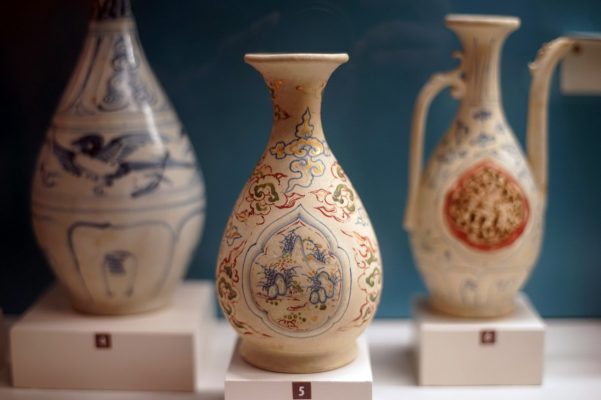
Lịch sử gốm Chu Đậu là một phần của nền văn hóa gốm sứ truyền thống của Việt Nam. Cuối thế kỷ 14, là thời kỳ phát triển cao nhất của đồ gốm Việt Nam, với nhiều loại men và hoa văn độc đáo, loại đồ gốm mà ngày nay chúng ta được biết dưới tên “Ðồ gốm Chu Ðậu”. Tiếc thay, nền kỹ...

Công ty Cổ phần Truyền thông Trường Thành, Công ty Cổ phần Trường học Thông minh phối hợp cùng Trường Tiểu học Tân Định tổ chức Ngày hội “Đổi mới sáng tạo và Sở hữu trí tuệ” cho học sinh, phụ huynh và giáo viên. Chương trình không đơn thuần là một sự kiện giáo dục mà là một h...

Ngày 29/5/2025, Công ty Cổ phần Truyền thông Trường Thành phối hợp cùng Công ty Cổ phần Smartschool tổ chức Ngày hội “Đổi mới sáng tạo và Sở hữu trí tuệ” dành cho học sinh và giáo viên tiểu học.

Sáng ngày 25/4, Trường Thành Media và Smartschool đã cử đại diện tham gia triển lãm tại "Lễ hưởng ứng Ngày Sở hữu trí tuệ Thế giới (IP Day) năm 2025" do Cục Sở hữu trí tuệ (Bộ Khoa học và Công nghệ) phối hợp với Sở Khoa học và Công nghệ thành phố Hà Nội.


